SANDYS ROW TOPS THE LIST
May 2009

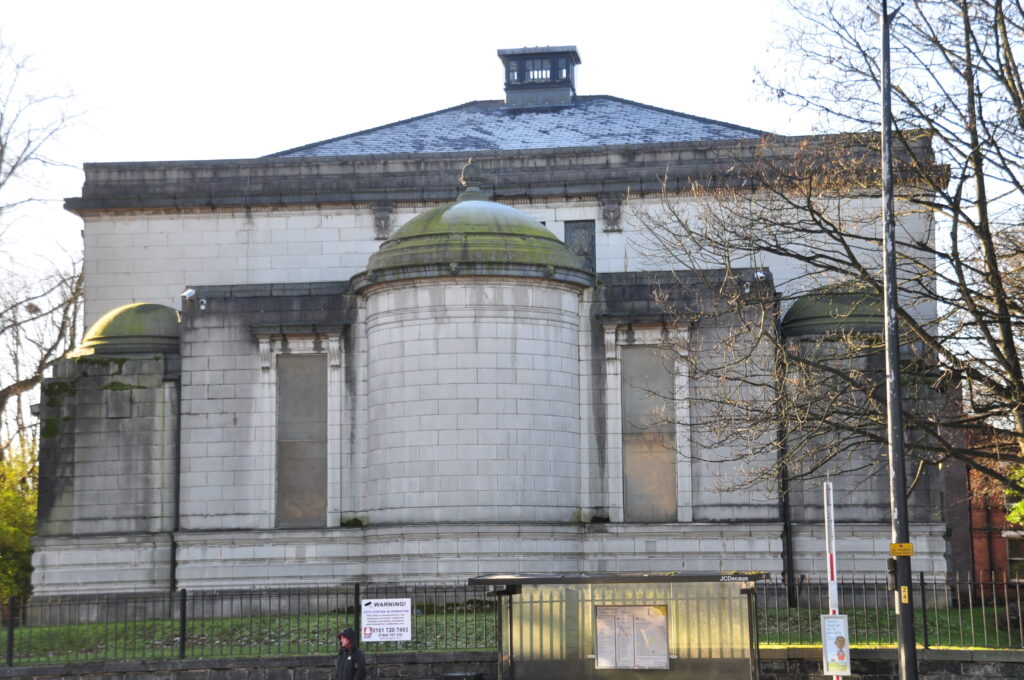
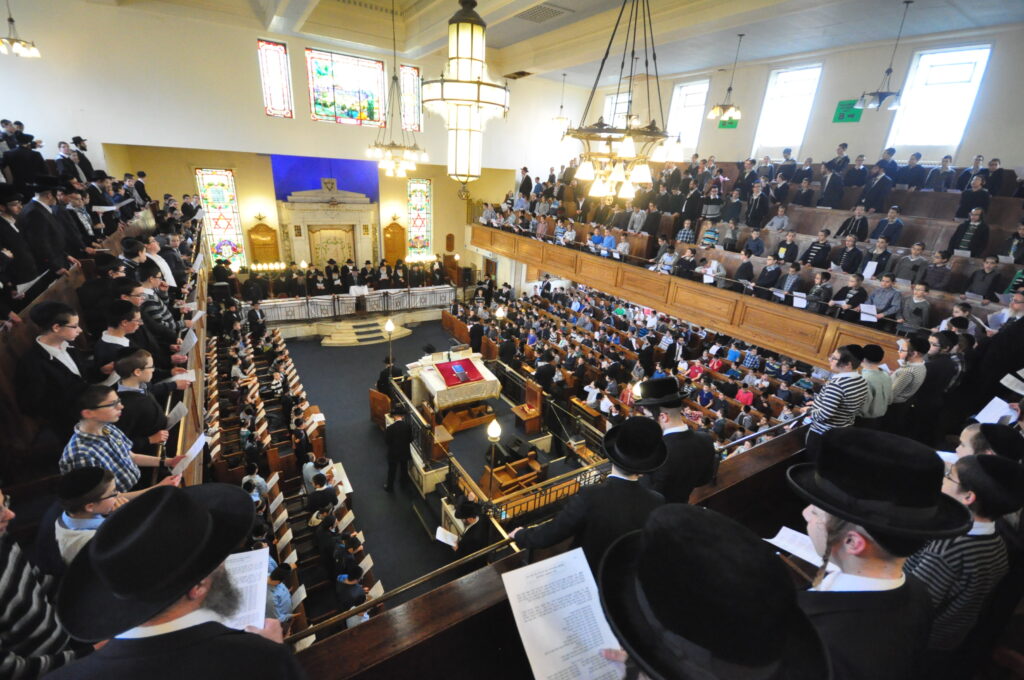
Sandys Row Synagogue
(Photo: Nigel Corrie © English Heritage
)
Sandys Row Synagogue in the East End of London has received the largest single grant yet awarded to a Grade II Listed synagogue - £254,000 under the English Heritage and Heritage Lottery Fund joint Listed Places of Worship Repair Grant Scheme. Sandys Row is London's Dutch Ashkenazi synagogue, housed in a mid-eighteenth century former Huguenot chapel.
Synagogue architect Nathan S. Joseph remodelled the building in 1870 so that the Ark was on the Jerusalem wall. It has defied dire predictions and is now set to enjoy a new lease of life with a renewal both of its roof and of its membership. Jewish Heritage Director Sharman Kadish says, “We urge other historic synagogues to follow their example and benefit from the joint repair grant scheme operated by English Heritage and the Heritage Lottery Fund”.
Sandys Row has been included in a nationwide survey of historic synagogues that Jewish Heritage is currently undertaking as part of English Heritage's initiative on “Heritage at Risk”. Besides grant aid for repairs, training days are on offer to the Jewish community, aimed at people - often volunteers - who have the responsibility of looking after historic synagogues. The training days are being run by Jewish Heritage in collaboration with the Society for the Protection of Ancient Buildings'
"Faith in Maintenance" project.
For further information and a free DVD email director@jewish-heritage-uk.org or Tel: 0161 275 3611. |
|
BRADFORD'S
RARE STAR
April 2009

Bradford
Reform Synagogue
(Photo: Bob Skingle © English
Heritage)
Bradford
Reform Synagogue is now Grade II* Listed.
Thanks
to the intervention of Jewish Heritage, Bradford’s
Victorian Reform Synagogue (T.H.
& F. Healey, 1881-2) has been awarded
a coveted extra star, raising its Listed status
from Grade II to Grade II*. Bradford is the second
oldest surviving Reform synagogue in the UK and,
unusually, predated the building of an Orthodox
synagogue in the town. German-born Jews played
an important role in the development of the local
woollen trade. Jacob Moser (1839-1922), a founder
of the Reform congregation and ardent early Zionist,
became mayor of Bradford. Architecturally, Bradford
is a very rare and well-preserved, small scale,
provincial synagogue built in ‘Oriental’ style.
It is perhaps the most thoroughgoing example
in British synagogue architecture of the 19th
century fashion for ‘Orientalism’ – both inside
and out. Today, this little synagogue and its
tiny congregation is a very important part of
the multi-cultural heritage of Bradford and West
Yorkshire. |
|
ENGLISH
HERITAGE SUPPORTS JEWISH HERITAGE
December 2008

Andy
Burnham and Sharman Kadish
(© Photo:
Howard Barlow)
Launch
of Places
of Worship Support Officers Scheme.
Dr
Sharman Kadish, Director of Jewish Heritage
UK, with Andy Burnham, the new Minister for
Culture, at the launch in Manchester of English
Heritage's Places of Worship Support Officers
Scheme. Under the Scheme, English Heritage
is making available £1.5 million to part-fund
30 heritage professionals to help congregations
of all faiths manage and maintain their historic
places of worship. |
|
JEWISH "CAPITAL
OF CULTURE" 2008
February 2008

Princes
Road Synagogue
(Photo:
Peter Williams © English Heritage)
Liverpool's
Princes Road Synagogue is now Grade I Listed.
The
announcement by the Department of Culture,
Media and Sport follows hard on the heels of
the upgrade of the city's Art Deco Greenbank
Drive Synagogue to Grade II*. The
public recognition of Princes Road as 'one
of Europe's finest cathedral synagogues' is
most fitting in the year in which the City
of Liverpool is designated 'European Capital
of Culture'.
Princes Road is only the third British synagogue
to achieve Grade I status. It has been brought
into line with its younger 'sister', the New
West End Synagogue in London, which became Grade
I last summer, joining Britain's oldest synagogue,
Bevis Marks. Liverpool is the first city outside
London to have a Grade I Listed Synagogue. |
|
EUROPEAN
CAPITAL OF CULTURE’S DECO SYNAGOGUE GAINS A STAR
February 2008

Greenbank
Drive Synagogue
(Photo:
Peter Williams © English Heritage)
The
New Hebrew Congregation synagogue in Liverpool’s
Greenbank Drive has been upgraded to Grade
II* by the Department of Media, Culture and
Sport on the initiative of the Twentieth
Century Society.
This
enhanced Listed status is recognition of Greenbank
Drive’s national significance as one of England’s
overlooked interwar buildings. The synagogue,
which officially closed in January, is amongst
only a handful built in the 1920s and 30s which
have remained largely unaltered, making it
one of the best examples of the period in the
country. Architect Alfred Shennan figures prominently
in the civic history of Liverpool, especially
for his work towards the construction of the
Mersey Tunnel. This was his only synagogue
and it is especially gratifying that its importance
is being recognised in the year in which Liverpool
celebrates as “European Capital of Culture”.
Jewish
Heritage’s Director Dr Sharman Kadish welcomed
this public acknowledgement of the special
qualities of the building. She expressed the
hope that the upgrade would advance the search
for sustainable new uses that will preserve
the integrity of its outstanding interior. “This
hidden gem of Liverpool Jewry,” she said,
“deserves our redoubled efforts to secure its
future. Any scheme which retains the synagogue
substantially intact is to be preferred over
conversion for residential or other purposes,
which would inevitably entail loss of historic
fabric and character”.
Jewish Heritage is actively working with the Congregation, their architects,
and other interested parties, to secure a fitting
future for this exceptional building. |
|
|